Having studied English Literature, I have always had a deep appreciation for the classics. Slightly shamefully, however, I never read Wuthering Heights, favouring Jane Eyre instead. That inevitably shapes this review. My perspective is not rooted in comparison to Emily Brontë’s original novel, but rather in my understanding of literary conventions, character construction and thematic depth.
With that in mind, here are my thoughts on the new adaptation.
Casting
The casting is, in my view, one of the film’s greatest strengths.
Owen Cooper, whom many will recognise from Adolescence, delivers a striking performance as the young Heathcliff. His portrayal feels instinctive and emotionally intelligent, laying a convincing foundation for the character’s later transformation. When Heathcliff matures into Jacob Elordi’s portrayal, the transition feels seamless. Elordi embodies a brooding intensity that never tips into caricature; his Heathcliff is magnetic yet deeply wounded.
Margot Robbie’s Catherine is equally compelling. Together, their performances are electric. The chemistry between them captures the paradox at the heart of the story, a love that is both irresistible and destructive. As an audience member, you find yourself torn: willing them towards each other, yet bracing for the suffering their union inevitably brings.
A particular mention must go to Hong Chau as Nelly. Her performance provokes a visceral reaction. Sitting in the cinema, there were genuine murmurs of frustration at her character’s decisions and moral positioning. That response is testament to the strength of her portrayal. Whether viewed as misguided, manipulative or merely pragmatic, Nelly becomes impossible to ignore. Chau ensures she is not passive narration, but an active force within the drama.
Lighting & Cinematic Tone
Visually, the film leans heavily into atmosphere. The use of red lighting in key moments is especially effective, intensifying scenes of anger, passion and emotional rupture. Accompanied by a swelling, almost intrusive score, these choices heighten the theatricality without feeling excessive.
The cinematography understands that Wuthering Heights is not a restrained romance; it is operatic. The lighting choices amplify that quality, drawing attention to the characters’ internal turmoil and allowing emotion to dominate the frame.
Setting, Weather & Costume
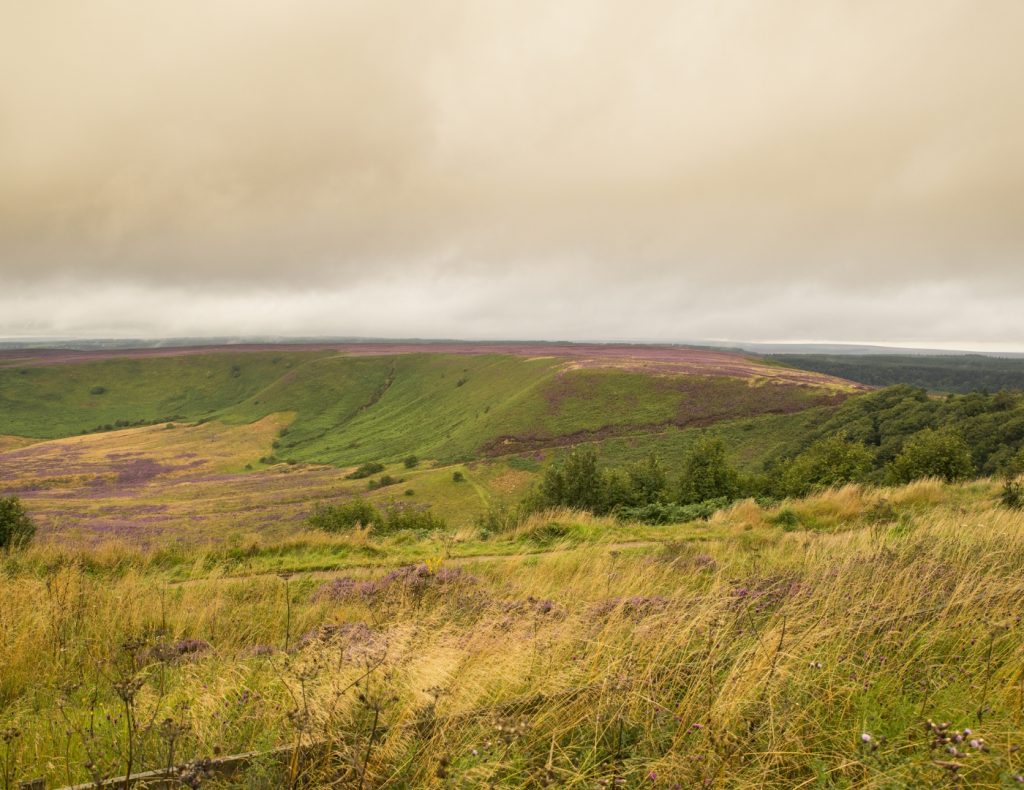
The environment functions almost as a character in its own right. The persistent bleakness of the moors, the relentless rain and the harsh winds operate as classic pathetic fallacy, externalising the characters’ isolation and emotional volatility. Wuthering Heights itself feels oppressive and exposed, reinforcing themes of entrapment and longing.
In sharp contrast, the Lintons’ estate is bathed in light. Sunlit scenes, open spaces and softer palettes visually articulate the social and emotional divide between the two households. The distinction is not subtle, but it is effective.
Costume design deserves particular praise. Margot Robbie’s wardrobe, both within the film and in its promotional cycle, has already begun influencing fashion conversations, from the re-emergence of delicate silhouettes to the unexpected revival of circular glasses. The styling bridges period authenticity with a contemporary sensibility, allowing younger audiences to engage visually with a nineteenth-century narrative.
The landscapes further emphasise the story’s insularity. The framing often isolates characters against vast, unforgiving scenery, reinforcing the sense that their world is small, enclosed and emotionally claustrophobic. When the Lintons appear, they feel not simply like neighbours, but like the only alternative, the only visible escape from the moors’ suffocating intensity.
The Passion & Its Portrayal
Much discussion has centred on the film’s depiction of passion, particularly its more raw, almost animalistic elements. Some viewers have questioned whether this aligns with their interpretation of the novel.
While I cannot speak from a position of direct textual comparison, I would argue that the heightened physicality feels intentional. Nineteenth-century literature was often constrained by what could be explicitly expressed; film does not share those limitations. The adaptation seems to lean into what may have always existed beneath the prose; an untamed, destructive longing that defies civility.
At times, these scenes are uncomfortable to watch. Yet that discomfort serves a purpose. The characters are not designed to be admirable; they are designed to be human. Flawed, impulsive, contradictory. Each carries emotional scars that inform their decisions. No one in this story is straightforward, and the film refuses to simplify them.
Final Thoughts
I was genuinely excited to write this review because I thoroughly enjoyed the film. It stands confidently on its own. Of the four of us who attended the cinema, two had already seen it and chose to return. That, in itself, speaks volumes.
Most importantly, the film has reconnected me with classic literature. It has prompted me to finally pick up Brontë’s original novel and reconsider it with fresh eyes. Any adaptation that inspires its audience to return to the source material has achieved something meaningful.